|
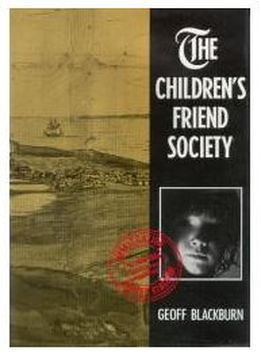
An extraordinary book, packed with indices, shipping lists, genealogical references, Original letters and journals etc., of the children who disappeared. In the 1830s, The Childrens Friend Society, in their eyes, rescued some 2000 children from the streets of London and shipped a large percentage of them out to the British Colonies, including Western Australia, South Africa and Canada. This is their story told for the first time. Many well known Western Australian families are descended from these children and did not know it. Contains a complete list of these lost children, a vital tool for genealogical research in Australia, Canada and South Africa. The authors detailed and painstaking research over a number of years has pieced together the history of the Society and uncovered the fate of many of these children.
|
|
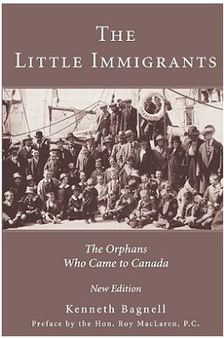
The Little Immigrants
|
Mentioned in this book, Not all BHC
William Andrews, Walter Axtell, Charles Beer, Lillian Bradley (EDWARDS Lilian), Mabel Carlton, William Coe, Margaret Crooks, (Margaret Ethel Chapman) Harold Dodham, John Dove, Eva Drain, Flora Durni, Charles Elliott, Winnifred Frost, Victor Fry, Charles Goddard, Roy Grant, George Gregory, William Harris, Ellen Higgins (Ellen Higgins nee Keatly was a 1905 Middlemore girl), Kathleen Hobday, Emily Leader, Norman Mckinlay, William Maclaren, Cant Major, Katherine Major, Nellie Merry, John Mileham, Phyllis Owen, Harry atience, James Payton, Arthur Pope, Annie Smith, Ann Louise Stuart, Richad Todd, Alice Tomison, Horace Weir, Cyril White, Ernest Wilerton, Lily Wilson, Margaret Wilson.
William Andrews, Walter Axtell, Charles Beer, Lillian Bradley (EDWARDS Lilian), Mabel Carlton, William Coe, Margaret Crooks, (Margaret Ethel Chapman) Harold Dodham, John Dove, Eva Drain, Flora Durni, Charles Elliott, Winnifred Frost, Victor Fry, Charles Goddard, Roy Grant, George Gregory, William Harris, Ellen Higgins (Ellen Higgins nee Keatly was a 1905 Middlemore girl), Kathleen Hobday, Emily Leader, Norman Mckinlay, William Maclaren, Cant Major, Katherine Major, Nellie Merry, John Mileham, Phyllis Owen, Harry atience, James Payton, Arthur Pope, Annie Smith, Ann Louise Stuart, Richad Todd, Alice Tomison, Horace Weir, Cyril White, Ernest Wilerton, Lily Wilson, Margaret Wilson.
|
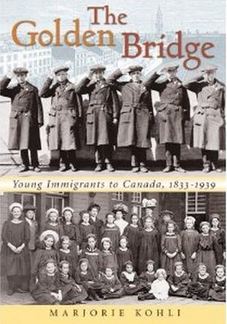
The Golden Bridge
|
|
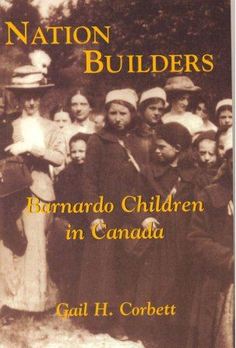
Nation Builders:
|
Any children's names mentioned in the book are as follows: Harold Green, age 13, SS Melita, St. John, NB, 1923; page 32 Wallace Ford, ran our of Canada into Hollywood fame, page 60 Rachel Hall, her death reported on May 7, 1903, rheumatism, page 60 Ralph Baxter, SS Sicilian, page 79,80 Alice Rutty Griffin, 1903, age 10, page 80-82 Edith Hutchinson, 1909, Sicilian, page 82. Mentions mother, sisters and baby brother David Hugh Caesar, March, 10, 1910, age 14, page 83 Dolly Griffin, October 1, 1910, Sicilian, page 85 Mary Warriner, page 86, 87 Helen Gough, page 88-90 C. W., page 91, September 10, 1914, Corinthian, 11 years old Daisy Peacock, September, 1914, Corinthian, pages 92-95 Annie Hall (Richmond), pages 95, 96 Doris Frayne, 1915, pages 96, 97 Len Russell, 1916, pages 98, 99 Francis M. Williams, June, 1920, 12 years old, pages 99-105 Ethel Lewis, September, 1922, Odanah, age 13?, pages 105-108 George and Walter Longyear, pages 108, 109 Margaret Wilson, page 109 Louise Stevens, 1923, page 110 Leslie Coombs, Montrose, page 111 Harold Green, age 10, 1923, twin brother sent to Australia, pages 112, 113 John Holman, April 10, 1931, Duchess of Richmond; brother Bill, pages 113-116 Jim Inwards, 1937, Duchess of Bedford, pages 117, 118 Jamie Jarvis, first child, emigrated to Canada with Annie Macpherson's party, 1868, page 121 A list of those on page 59 (a selection from the Register of Internments at Little Lake Cemetary, Peterborough, Ontario - Barnardo Home Plot): George Beagle, age 17, died at Otonabee River, 1885, accidentally drowned Harriet Beeley, age 16, died at Peterborough, 1888, brain disease Elizabeth Birch, age 12, died at Peterborough, 1889, accidentally drowned Ellen Robinson, age 9, died at Peterborough, 1895, scarlet fever & paralysis Louisa Boyle, age 17, died at Peterborough, 1894, typhoid fever Esther Rondeau, age 23, died at Peterborough, 1895, consumption Ada Barker, age 18, died at Hastings, 1896, pneumonia Bertha Pickering, age 14, died at Peterborough, 1896, consumption Jane Buddle, age 10, died at Peterborough, 1898, phthipis Jane Loveday (Secretary), age 55, died at Ottawa, 1906, burned in Gilmour House Fire Ivy Plant, age 16, died at Peterborough, 1913, asthemia Alfred Punicard, age 14, Peterborough, 1914, cerebral spine meningitis Adelaide Pearce, (Teacher), age 45, died at York, 1918, Phthipis Pulmonotis Isabella Bidwell, age 23, died at Peterborough, 1920, influenza pneumonia The original Canadian Barnardo Staff were: Superintendants Mr. and Mrs. Edward Duff, Miss Millie Sanderson, Secretary, and Mr. A. B. Owen, travelling agent.
Uprooted: The Shipment of Poor Children
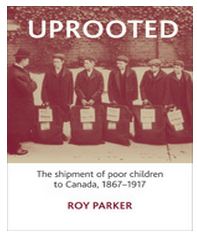
Title: Uprooted: The Shipment of Poor ChildrenBookID: uprooted-nonficAuthors: Roy ParkerISBN-10(13): 1847426689Publisher: University of British Columbia PressPublication date: February 20, 2008Edition: 1stLanguage: EnglishPrice: Varies
Some 80,000 British children - many of them under the age of ten - were shipped from Britain to Canada by Poor Law authorities and voluntary bodies during the 50 years following Confederation in 1867. How did this come about? What were the motives and methods of the people involved in both countries? Why did it come to an end? What effects did it have on the children involved and what eventually became of them? These are the questions Roy Parker explores in a meticulously researched work that brings together economic, political, social, medical, legal, administrative and religious aspects of the story in Britain and Canada. He concludes with a moving review of evidence from more recent survivors of child migration, discussing the lifelong effects of their experiences with the help of modern psychological insights.
His book - humane and highly professional - will capture and hold the interest of many: the academic, the practitioner and the general reader; and they will include the relatives and descendants, both in Britain and Canada, of the children around whom this study revolves.
Some 80,000 British children - many of them under the age of ten - were shipped from Britain to Canada by Poor Law authorities and voluntary bodies during the 50 years following Confederation in 1867. How did this come about? What were the motives and methods of the people involved in both countries? Why did it come to an end? What effects did it have on the children involved and what eventually became of them? These are the questions Roy Parker explores in a meticulously researched work that brings together economic, political, social, medical, legal, administrative and religious aspects of the story in Britain and Canada. He concludes with a moving review of evidence from more recent survivors of child migration, discussing the lifelong effects of their experiences with the help of modern psychological insights.
His book - humane and highly professional - will capture and hold the interest of many: the academic, the practitioner and the general reader; and they will include the relatives and descendants, both in Britain and Canada, of the children around whom this study revolves.
|
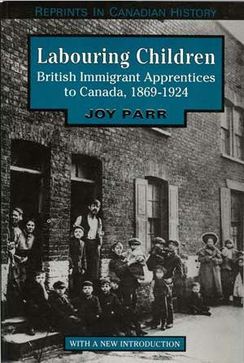
Labouring Children: British Immigrant Apprentices to Canada, 1869-1924
Between 1868 and 1924, 80,000 British children, most of them under fourteen, came to Canada to be apprenticed as labourers and domestic servants. Joy Parr's study of these children, first published in 1980, became a significant resource for courses in women's history, family history, immigration history, and labour history. Out of print for several years, Labouring Children now has a substantial new introduction in which the author examines the historiography of the history of childhood, particularly in the light of recent literature on sexuality and the post-structuralist critique. She also considers recent popular historical views of children and their relationship to professional history.
http://joyparr.com/category/format/books/ |
Prosecuting vice; etc. : Emma Stirling's work for children, youth and young women, 1894-95 by Julielynne Marie Anderson
Thesis (M.A.)--Saint Mary's University, 2007
Emma Maitland Stirling, if she is known at all in Nova Scotia, is known for her child migration work in the province between 1886 and 1895. Yet, her last years here have not been fully explored and her work with the Maritime Woman's Christian Temperance Union has been completely overlooked. Emma Stirling's efforts with the WCTU were about combating the possibility of moral decay in Nova Scotia society. Particularly important at times, was combating this apparent moral decay in the young of the world. In 1895 this work with the WCTU would converge for Stirling with her child migration work. The Parker and Miller abortion trial, Stirling's last engagement in Nova Scotia, must be re-envisioned as an extension of Stirling's WCTU work. By defending Grace Fagan, a grown child migrant, Stirling believed she was defending all the young of Nova Scotia society, local or transplanted, from moral degradation.
lLibrary and Archives Canada
lLibrary and Archives Canada
Child migration in the Maritime provinces : typical purposes and problems
By Julielynne Marie Anderson
Thesis (B.A.)--Mount Allison University, 2004
|
Planters, Paupers, and Pioneers
|
|
Adventurers & Exiles
|
|
Empty Cradles
Title: Empty CradlesBookID: empty-nonficAuthors: Margaret HumphreysISBN-10(13): 055214164XPublisher: Transworld PublishersPublication date: August 1, 1996Edition: 1stLanguage: EnglishPrice: $4.86 and up
In 1986 Margaret Humphreys, a Nottingham social worker, investigated the case of a woman who claimed that, at the age of four, she had been put on a boat to Australia by the British government. Margaret Humphreys soon discovered that as many as 150,000 children had in fact been deported from children's homes in Britian and shipped off to a "new life" in distant parts of the Empire—the last as recently as 1967. For numerous children it was to be a life of horrendous physical and sexual abuse in institutions in Western Australia and elsewhere. Margaret Humphreys reveals how she gradually unravelled this shocking secret, how she became drawn into the lives of some of these innocent and unwilling exiles, and how it became her mission to reunite them with their families. |
Smithers. A True Story of Private Imperialism - 1912
Authors
Copping, Arthur E. with forward by Preface by G. Bogue Smart
Related Subjects
Barnardo, Thomas John, 1845-1905
Children--Canada--History
Canada--Emigration and immigration
Barnardo, Thomas John, 1845-1905
Enfants--Canada--Histoire
Canada--Émigration and immigration
Copping, Arthur E. with forward by Preface by G. Bogue Smart
Related Subjects
Barnardo, Thomas John, 1845-1905
Children--Canada--History
Canada--Emigration and immigration
Barnardo, Thomas John, 1845-1905
Enfants--Canada--Histoire
Canada--Émigration and immigration
Hespeler's Hidden Secret: The Coombe Orphanage, 1905-1947
Ellen Smyly home.
|
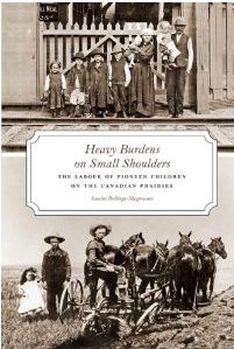
Heavy Burdens on Small Shouldersby Sandra Rollings-Magnusson
University Of Alberta Press | May 26, 2009 | Trade Paperback Heavy Burdens on Small Shoulders is a unique investigation which focuses on an aspect of prairie history that has been overlooked in Canadian literature?the labour of children. It details the findings of a study into the role that children?s work played in the execution of homesteading operations during the pioneer era between 1871 and 1913. Analyzing the labour of boys and girls, whether helping to build the family home, taking part in productive, subsistence or enterpreneurial tasks, or being responsible for various domestic duties, enables the reader to understand how important children?s work was to the success of the family farm. Furthermore, when economic, social, political difficulties, and environmental hazards of the time are also taken into account, the labour contribution of children becomes even more remarkable. Using a variety of archival materials, the author has conducted a study that gives readers a fuller understanding of how families survived, how the wheat economy was developed, and how burdens were carried on the shoulders of the smallest farm labourers |
|
|
|
The Childrens Homefinder:
|
Emigration and Empire: The Life of Maria S. Rye (Literature and Society in Victorian Britain)
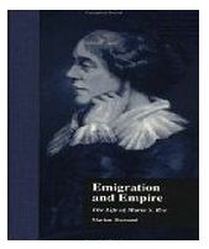
Title: Emigration and Empire: The Life of Maria S. Rye (Literature and Society in Victorian Britain)BookID: emigration-nonficAuthors: Marion DiamondISBN-10(13): 0815325282Publisher: RoutledgePublication date: June 1, 1999Edition: 1stLanguage: EnglishPrice: Varies
Maria S. Rye, a woman motivated by both feminist and philanthropic ideals, devoted her life to the migration of women and girls out of England. This biography gives an account of Rye's activities from her early engagement with liberal feminism through her association with the "Langham Place group" in the 1850s, her work as a journalist and with the Society for Promoting Women's Employment, through to her efforts in women's and children's emigration.
Between 1861 and 1896, Maria S. Rye sent many hundreds of single women out to Australia, New Zealand and South Africa, and more than four thousand children to Canada, all with the promise of a better life in the British colonies than they could expect at home in England. Like many nineteenth century advocates of emigration, she saw it as a panacea for many social ills, taking people from impoverishment in the old world to the hope of better prospects in the new. Unlike other advocates, she linked this enthusiasm for emigration with the ideals of liberal feminism, arguing that women and girls should share the opportunities for advancement that the colonies offered to men and boys
Rye played a central role in developing organizations to facilitate the migration of women and girls, starting with the Female Middle Class Emigration Society in 1861. After 1869 she concentrated on the migration of so-called "gutter-children" to Canada, where her pioneering efforts were followed by numerous other philanthropic associates, such as Barnardo
This biography analyzes how feminism and philanthropy intertwined in her activities, and how her early concerns with the rights of women to economic opportunity came to be over-ridden by an authoritarian streak that led to the tragic excesses of her work in juvenile migration.
This book can be previewed at GOOGLE BOOKS.
Maria S. Rye, a woman motivated by both feminist and philanthropic ideals, devoted her life to the migration of women and girls out of England. This biography gives an account of Rye's activities from her early engagement with liberal feminism through her association with the "Langham Place group" in the 1850s, her work as a journalist and with the Society for Promoting Women's Employment, through to her efforts in women's and children's emigration.
Between 1861 and 1896, Maria S. Rye sent many hundreds of single women out to Australia, New Zealand and South Africa, and more than four thousand children to Canada, all with the promise of a better life in the British colonies than they could expect at home in England. Like many nineteenth century advocates of emigration, she saw it as a panacea for many social ills, taking people from impoverishment in the old world to the hope of better prospects in the new. Unlike other advocates, she linked this enthusiasm for emigration with the ideals of liberal feminism, arguing that women and girls should share the opportunities for advancement that the colonies offered to men and boys
Rye played a central role in developing organizations to facilitate the migration of women and girls, starting with the Female Middle Class Emigration Society in 1861. After 1869 she concentrated on the migration of so-called "gutter-children" to Canada, where her pioneering efforts were followed by numerous other philanthropic associates, such as Barnardo
This biography analyzes how feminism and philanthropy intertwined in her activities, and how her early concerns with the rights of women to economic opportunity came to be over-ridden by an authoritarian streak that led to the tragic excesses of her work in juvenile migration.
This book can be previewed at GOOGLE BOOKS.
Middlemore Atlantic Society
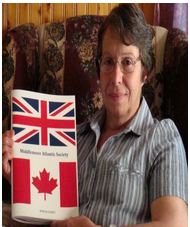
Title: Middlemore Atlantic SocietyBookID: midatsoc-nonficAuthors: Marion CrawfordISBN-10(13): N-O-N-E1Publisher: Middlemore Atlantic SocietyPublication date: 2011Edition: 1stLanguage: EnglishPrice: $25.00 CA
The British Home Children remains one of the least known elements of our society.
Despite the fact that 100,000 of these kids - mostly waifs and strays picked up off the streets of British cities - were shipped to Canada between 1869 and 1939, people know little about them or what circumstances may have occurred to place them here.
Many are surprised to learn that these children and their descendents now make up 12 per cent of our population.
But, little by little, more of this important part of our history is becoming known.Thanks to a new book by Sussex resident Marion Crawford, called Middlemore Atlantic Society, Canadians are one step closer to understanding these youngsters.
Mrs. Crawford's new publication follows a pair of significant events in Canada over the last 12 months.Thanks to the hard work of many, 2010 was not only declared the year of the British Home Child, Canada Post was persuaded to issue a commemorative stamp.A pair of quilts were also created to help promote the year's events.
"It seemed to me that something was still lacking and so after some encouragement from the Kings County Historical Society, I decided that a book to commemorate the 30th consecutive annual reunion of the British Home Children needed to be addressed," Mrs. Crawford said in explaining the motivation behind her new publication.
"I began in November 2010 to compile what, I thought, would be of interest to those who have attended the reunions in the past years, as well as give the general public a look at the origin of the children's immigration movement and how the Middlemore reunions began."
Middlemore, based in Birmingham, England, sent thousands of kids to the Maritimes.The reunions, meanwhile, have become a late summer fixture in Fredericton."To some who have attended in the past, the search for their personal historical connection was what drew them to these events," Mrs. Crawford pointed out. "However, the overall intention to carrying on the reunions has been to honour our British Home Children by making that one day of the year, a day that they take top priority in our lives."
Mrs. Crawford's grandfather, Joseph Ernest Taylor, was a British Home Child, arriving in Canada in 1911.Over the years, Mrs. Crawford, a researcher, has been able to help countless individuals, not just in Canada, but many from the U.S., Australia and the U.K. She's been successful in helping them find direction to further their search.
"We have been able to play a role in several families getting reunited and three of these families have been highlighted in the book," Mrs. Crawford said.There are 126 photos in the 94-page book - many of which are in colour and available through Mrs. Crawford.
When these children were sent to Canada and Australia, the idea was to provide them with a better life.The plan was a sound one in theory but it didn't always work out as planned.Some, as young as three, suffered abuse at the hands of the very people who promised to look after.Supposed care-givers became tormentors from hell.
Although the home children were looked down upon because of their unfortunate circumstances in life, they were not stupid .They were nothing more than the unfortunate victims of their own circumstances.Many went on to become leaders of society.
We owe them much.
Mrs. Crawford's book is currently on sale at the Kings County Museum (Hampton), Sussex Co-op Grocery and the Sussex General Store and Emporium for $25 each. The books will also be on sale Sept.17 at the 31st annual British Home Child reunion, slated for the St. John's Anglican Church Hall, 75 Main St., Fredericton. They can also be ordered direct from Marion Crawford, [email protected] or [email protected]
Michael Staples is a reporter/editor with The Daily Gleaner. He can be reached at [email protected].
The British Home Children remains one of the least known elements of our society.
Despite the fact that 100,000 of these kids - mostly waifs and strays picked up off the streets of British cities - were shipped to Canada between 1869 and 1939, people know little about them or what circumstances may have occurred to place them here.
Many are surprised to learn that these children and their descendents now make up 12 per cent of our population.
But, little by little, more of this important part of our history is becoming known.Thanks to a new book by Sussex resident Marion Crawford, called Middlemore Atlantic Society, Canadians are one step closer to understanding these youngsters.
Mrs. Crawford's new publication follows a pair of significant events in Canada over the last 12 months.Thanks to the hard work of many, 2010 was not only declared the year of the British Home Child, Canada Post was persuaded to issue a commemorative stamp.A pair of quilts were also created to help promote the year's events.
"It seemed to me that something was still lacking and so after some encouragement from the Kings County Historical Society, I decided that a book to commemorate the 30th consecutive annual reunion of the British Home Children needed to be addressed," Mrs. Crawford said in explaining the motivation behind her new publication.
"I began in November 2010 to compile what, I thought, would be of interest to those who have attended the reunions in the past years, as well as give the general public a look at the origin of the children's immigration movement and how the Middlemore reunions began."
Middlemore, based in Birmingham, England, sent thousands of kids to the Maritimes.The reunions, meanwhile, have become a late summer fixture in Fredericton."To some who have attended in the past, the search for their personal historical connection was what drew them to these events," Mrs. Crawford pointed out. "However, the overall intention to carrying on the reunions has been to honour our British Home Children by making that one day of the year, a day that they take top priority in our lives."
Mrs. Crawford's grandfather, Joseph Ernest Taylor, was a British Home Child, arriving in Canada in 1911.Over the years, Mrs. Crawford, a researcher, has been able to help countless individuals, not just in Canada, but many from the U.S., Australia and the U.K. She's been successful in helping them find direction to further their search.
"We have been able to play a role in several families getting reunited and three of these families have been highlighted in the book," Mrs. Crawford said.There are 126 photos in the 94-page book - many of which are in colour and available through Mrs. Crawford.
When these children were sent to Canada and Australia, the idea was to provide them with a better life.The plan was a sound one in theory but it didn't always work out as planned.Some, as young as three, suffered abuse at the hands of the very people who promised to look after.Supposed care-givers became tormentors from hell.
Although the home children were looked down upon because of their unfortunate circumstances in life, they were not stupid .They were nothing more than the unfortunate victims of their own circumstances.Many went on to become leaders of society.
We owe them much.
Mrs. Crawford's book is currently on sale at the Kings County Museum (Hampton), Sussex Co-op Grocery and the Sussex General Store and Emporium for $25 each. The books will also be on sale Sept.17 at the 31st annual British Home Child reunion, slated for the St. John's Anglican Church Hall, 75 Main St., Fredericton. They can also be ordered direct from Marion Crawford, [email protected] or [email protected]
Michael Staples is a reporter/editor with The Daily Gleaner. He can be reached at [email protected].
Orphans of the Empire; The shocking story of child migration to Australia
Title: Orphans of the Empire; The shocking story of child migration to AustraliaBookID: orphans-nonficAuthors: Alan GillISBN-10(13): 1864290625Publisher: MillenniumPublication date: 1997Edition: 1stLanguage: EnglishPrice: Varies
"This book draws back the curtain on a part of Australian and British history that has been crying out for recogition. All Australians should read it" Sir Ronald Wilson "This story is remarkable. Even more remarkable is the fact that, until now, it was largely untold. This is an important story, an important part of Australia's story and long overdue. David Hill "Orphans of the Empire is unusually affecting, hard to put down..." Geraldine Doogue The praise goes on and on for this remarkable book which was published first in late 1997 by Millennium just before that company went into liquidation. Only 1,500 copies were printed and all sold within weeks. Now Random House has republished this book in a more accessible format with a new chapter. This is a book about the white stolen children - a lost tribe - who were supposedly orphans arriving in Australia from many countries to a better future but who in reality simply came from poor families and arrived to uncertain futures and often extremely abusive environments in various institutions. More than 80,000 people were directly involved in this experience as 'orphans' while thousands more have been affected by the experience as children and relatives of the orphans and as Australian born children who were also living in the institutions described in this book. Although there were occasional great acts of kindness towards these children there was also systematic abuse of all kinds. Orphans of the Empire is based on hundreds of hours of taped interviews with men and women who came to Australia as child migrants. It is the complete, shocking story.
"This book draws back the curtain on a part of Australian and British history that has been crying out for recogition. All Australians should read it" Sir Ronald Wilson "This story is remarkable. Even more remarkable is the fact that, until now, it was largely untold. This is an important story, an important part of Australia's story and long overdue. David Hill "Orphans of the Empire is unusually affecting, hard to put down..." Geraldine Doogue The praise goes on and on for this remarkable book which was published first in late 1997 by Millennium just before that company went into liquidation. Only 1,500 copies were printed and all sold within weeks. Now Random House has republished this book in a more accessible format with a new chapter. This is a book about the white stolen children - a lost tribe - who were supposedly orphans arriving in Australia from many countries to a better future but who in reality simply came from poor families and arrived to uncertain futures and often extremely abusive environments in various institutions. More than 80,000 people were directly involved in this experience as 'orphans' while thousands more have been affected by the experience as children and relatives of the orphans and as Australian born children who were also living in the institutions described in this book. Although there were occasional great acts of kindness towards these children there was also systematic abuse of all kinds. Orphans of the Empire is based on hundreds of hours of taped interviews with men and women who came to Australia as child migrants. It is the complete, shocking story.
The Quarriers Story, One Mans Vision Which Gave Over 40,000 Children a New Life
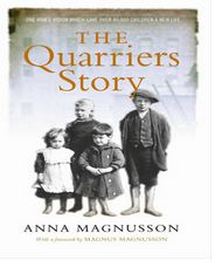
Title: The Quarriers Story, One Mans Vision Which Gave Over 40,000 Children a New LifeBookID: quarriers-nonficAuthors: Anna MagnussonISBN-10(13): 1841584940Publisher: Publication date: 2006Edition: 1stLanguage: EnglishPrice: $24.95 CA
In 1871, Glasgow shoemaker William Quarrier founded an organisation which offered help to the thousands of destitute children in Glasgow’s infamous slums. Shortly after Quarriers Village was opened, providing a refuge in the rolling fields of Renfrewshire. Since these beginnings, Quarriers has cared for over 40,000 children in need and now provides support and care for adults and children with a wide range of physical or learning disadvantages and their families. This is a detailed record of the organisation’s evolution and an inspiring story of one man’s legacy.
This book, by Anna Magnusson, chronicles the history of Quarriers from its earliest days as a refuge for thousands of destitute children in Victorian Scotland through to becoming one of the 21 st century’s leading social care charities. It tells the inspiring story of how the vision and determination of one man – William Quarrier – created a legacy which continues to serve the people of Scotland to this day.
In 1871, Glasgow shoemaker William Quarrier founded an organisation which offered help to the thousands of destitute children in Glasgow’s infamous slums. Shortly after Quarriers Village was opened, providing a refuge in the rolling fields of Renfrewshire. Since these beginnings, Quarriers has cared for over 40,000 children in need and now provides support and care for adults and children with a wide range of physical or learning disadvantages and their families. This is a detailed record of the organisation’s evolution and an inspiring story of one man’s legacy.
This book, by Anna Magnusson, chronicles the history of Quarriers from its earliest days as a refuge for thousands of destitute children in Victorian Scotland through to becoming one of the 21 st century’s leading social care charities. It tells the inspiring story of how the vision and determination of one man – William Quarrier – created a legacy which continues to serve the people of Scotland to this day.
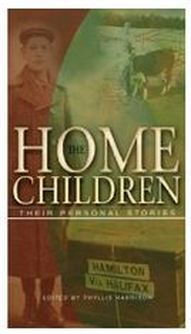
|
Home ChildrenTitle: The Home ChildrenBookID: homechil-nonficAuthors: Phyllis HarrisonISBN-10(13): 0920486150Publisher: J.Gordon ShillingfordPublication date: November 14, 2003Edition: 1stLanguage: EnglishPrice: $16.95 US
More than 100,000 British children came to Canada to be indentured to farmers between 1869 and 1939. In their own words, some of the survivors recall the circumstances that separated them from their families and the reality of loneliness, hard work and discrimination in a vast new country. Phyllis Harrison is a former social worker and journalist. Her book documents a major, but little known event in Canadian History. |
British Home Children mentioned in this book
Emily Boys - June, 1871 - Maria Rye Emma Magahay, nee Kennett - 1878 William Jeffrey Baldwin - 1885? -Mr Fegan George Fisher - 1883- Barnardo Minnie Esther Ashmore - 1878 - Barnardo Thomas Loach - May 1877 Agnes McFadden, nee Short - around 1880 - Barnardo J. L. Churcher - 1894 - Quarrier Robert Bishop - fall of 1896 John Henry Thomas - 1897/98 - Barnardo Lillie Beatrice Wood, nee Elizabeth Owen - 1890 - Maria Rye Emily King - about 1897 - Barnardo Percy Ashby - Barnardo George E. Penfold - Barnardo Margaret Cleaves, nee Johnson - May or June 1888 - Maria Rye Harry Jeffrey - July 1904 - Barnardo William Gwilliam - 1902 George Sears - May 1904 - Father Bann's home Fred Ashmore - April 1903 - Mrs. Merry's Home in Belleville Albert J. Dance - March 1901 - Barnardo Flora Harrison, nee Ward - around 1904 - Maria Rye Richard Jack - 1904? - Barnardo Ellen Higgins, nee Keatly - 1905 - Middlemore Home William Charlton - 1902 - Barnardo Geroge Mackie - 1907 - Brockville Home Ernest A. C.Gould - July 1, 1905 - Barnardo Thomas Wharf - June 1908 - Barnardo Dave J. Brims - May 4, 1907 William Wood - 1905? - Barnardo Arthur James Dare - Barnardo Alex McKean - 1905 - Barnardo Charles W. Carver - August 1905 Jack Saunders - April 1908 - Quarrier Percy F. Mitchell - July 1905 - Barnardo Matthew Clarke - March 1908 - Barnardo William Tonkin - 1909 - Fegan Richard Maguire - February 1909 - Knowlton, Quebec George McDonald - May 1909 - Coombe House at Hespeler, Ontario Walter Baker - March 1909 - Barnardo Percy White - 1909 - Barnardo Anna Hollamby - July 1909 - Barnardo Clinton Webb, Sr. - spring of 1909 - Barnardo Jim Eccleston - May 1910 - Middlemore Home Mary Wallace Blake, nee Woodhall - 1910 - Knowlton, Quebec John H. Atkinson - March 1910 - Barnardo Pollie Jones - March 1910 - Knowlton, Quebec Hugh West - December 1910 Mary Wunder nee Doncaster - Macpherson Home Colin Taylor - Fegan - April 1910 William Houghton - Barnardo - 1910 Patrick Thomas Markham - Barnardo - 1911 Selina M. Barker - 1912 - Barnardo Lily Stewart, nee Clapham - 1912 William Moir - Quarrier - 1912 Florence Horne - September 1911 - Barnardo Lillian McFadden - March 1912 - Barnardo James Wilde - Barnardo - spring of 1912 Ethel May Smith - 1912 Frederick John Bubb - Middlemore Home - May 30, 1914 Anna Mae Telford, nee Evans - April 15, 1913 - Knowlton, Quebec Mary Feldey - June 1914 - Barnardo Michael Driscoll - August 28, 1913 Vernon Nelson - September 1914 Harry Dowson - March 20, 1913 - Knowlton, Quebec Walter Henry Miles - May 16, 1913 W. B. Cartledge - Quarrier - April 18, 1914 Winnifred Titus, nee Jordan - May 1920 - Middlemore Timothy Johnson - September 1920 - Barnardo W. H. Bates - March 1920 - Barnardo Gladys Jessie Simm, nee Hunt - March 28, 1920 - Barnardo Francis Burchett - 1920 - J. A. Gibbs Home Len Weston - March 1920 - Barnardo Arthur Drape - September 1920 - Barnardo Charles Gilkes - March 11, 1920 Norah Gray - September 1920 - Barnardo Charles R. Morris, ne Reginald Greengrass - Barnardo - September 22, 1922 Vera Dorland, nee Coote - April 1925 - Barnardo Fred Sanders - 1924 - Middlemore Home Ernest H. Harvey - September 13, 1923 Rudy Wilson - Salvation Army James Rook - September 22, 1922 - Barnardo Robert Guthrie William Coleman - 1927 - Salvation Army Walter G. Alway - Barnardo Frank Searle Allan M. Slade - spring of 1926 E. Marshall - August 1926 - National Children's Home Colin Perry - April 1926 Joseph D. Betts - March 1927 - Marchmont Home in Belleville William Donaldson - May 1929 James J. Crookes - June 1929 W. R. Elliott - Quarrier - 1928 L. Brannigan - 1930 - Crusade of Rescue Thomas Hilton - April 14, 1928 - Barnardo Robert MacDonald - February 1929 - Salvation Army A. O'Hanlon - June 1928 James Drummond John Cameron - 1930 - Quarrier
Transcribed by Kim Lalonde
Emily Boys - June, 1871 - Maria Rye Emma Magahay, nee Kennett - 1878 William Jeffrey Baldwin - 1885? -Mr Fegan George Fisher - 1883- Barnardo Minnie Esther Ashmore - 1878 - Barnardo Thomas Loach - May 1877 Agnes McFadden, nee Short - around 1880 - Barnardo J. L. Churcher - 1894 - Quarrier Robert Bishop - fall of 1896 John Henry Thomas - 1897/98 - Barnardo Lillie Beatrice Wood, nee Elizabeth Owen - 1890 - Maria Rye Emily King - about 1897 - Barnardo Percy Ashby - Barnardo George E. Penfold - Barnardo Margaret Cleaves, nee Johnson - May or June 1888 - Maria Rye Harry Jeffrey - July 1904 - Barnardo William Gwilliam - 1902 George Sears - May 1904 - Father Bann's home Fred Ashmore - April 1903 - Mrs. Merry's Home in Belleville Albert J. Dance - March 1901 - Barnardo Flora Harrison, nee Ward - around 1904 - Maria Rye Richard Jack - 1904? - Barnardo Ellen Higgins, nee Keatly - 1905 - Middlemore Home William Charlton - 1902 - Barnardo Geroge Mackie - 1907 - Brockville Home Ernest A. C.Gould - July 1, 1905 - Barnardo Thomas Wharf - June 1908 - Barnardo Dave J. Brims - May 4, 1907 William Wood - 1905? - Barnardo Arthur James Dare - Barnardo Alex McKean - 1905 - Barnardo Charles W. Carver - August 1905 Jack Saunders - April 1908 - Quarrier Percy F. Mitchell - July 1905 - Barnardo Matthew Clarke - March 1908 - Barnardo William Tonkin - 1909 - Fegan Richard Maguire - February 1909 - Knowlton, Quebec George McDonald - May 1909 - Coombe House at Hespeler, Ontario Walter Baker - March 1909 - Barnardo Percy White - 1909 - Barnardo Anna Hollamby - July 1909 - Barnardo Clinton Webb, Sr. - spring of 1909 - Barnardo Jim Eccleston - May 1910 - Middlemore Home Mary Wallace Blake, nee Woodhall - 1910 - Knowlton, Quebec John H. Atkinson - March 1910 - Barnardo Pollie Jones - March 1910 - Knowlton, Quebec Hugh West - December 1910 Mary Wunder nee Doncaster - Macpherson Home Colin Taylor - Fegan - April 1910 William Houghton - Barnardo - 1910 Patrick Thomas Markham - Barnardo - 1911 Selina M. Barker - 1912 - Barnardo Lily Stewart, nee Clapham - 1912 William Moir - Quarrier - 1912 Florence Horne - September 1911 - Barnardo Lillian McFadden - March 1912 - Barnardo James Wilde - Barnardo - spring of 1912 Ethel May Smith - 1912 Frederick John Bubb - Middlemore Home - May 30, 1914 Anna Mae Telford, nee Evans - April 15, 1913 - Knowlton, Quebec Mary Feldey - June 1914 - Barnardo Michael Driscoll - August 28, 1913 Vernon Nelson - September 1914 Harry Dowson - March 20, 1913 - Knowlton, Quebec Walter Henry Miles - May 16, 1913 W. B. Cartledge - Quarrier - April 18, 1914 Winnifred Titus, nee Jordan - May 1920 - Middlemore Timothy Johnson - September 1920 - Barnardo W. H. Bates - March 1920 - Barnardo Gladys Jessie Simm, nee Hunt - March 28, 1920 - Barnardo Francis Burchett - 1920 - J. A. Gibbs Home Len Weston - March 1920 - Barnardo Arthur Drape - September 1920 - Barnardo Charles Gilkes - March 11, 1920 Norah Gray - September 1920 - Barnardo Charles R. Morris, ne Reginald Greengrass - Barnardo - September 22, 1922 Vera Dorland, nee Coote - April 1925 - Barnardo Fred Sanders - 1924 - Middlemore Home Ernest H. Harvey - September 13, 1923 Rudy Wilson - Salvation Army James Rook - September 22, 1922 - Barnardo Robert Guthrie William Coleman - 1927 - Salvation Army Walter G. Alway - Barnardo Frank Searle Allan M. Slade - spring of 1926 E. Marshall - August 1926 - National Children's Home Colin Perry - April 1926 Joseph D. Betts - March 1927 - Marchmont Home in Belleville William Donaldson - May 1929 James J. Crookes - June 1929 W. R. Elliott - Quarrier - 1928 L. Brannigan - 1930 - Crusade of Rescue Thomas Hilton - April 14, 1928 - Barnardo Robert MacDonald - February 1929 - Salvation Army A. O'Hanlon - June 1928 James Drummond John Cameron - 1930 - Quarrier
Transcribed by Kim Lalonde
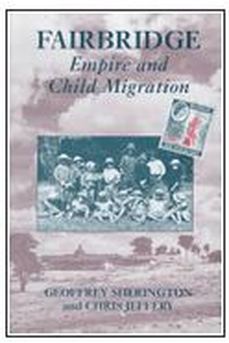
The Forgotten Children: Fairbridge Farm School and Its Betrayal of Australias Child Migrants
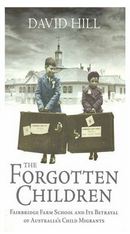
Title: The Forgotten Children: Fairbridge Farm School and Its Betrayal of Australias Child MigrantsBookID: forgottench-nonficAuthors: David HillISBN-10(13): 1741666848Publisher: Random House AustraliaPublication date: May 1, 2007Edition: 1stLanguage: EnglishPrice: Varies
In 1959 David Hill's mother, a poor single parent living in England, reluctantly decided to send her sons to Fairbridge Farm School in New South Wales where, she was led to believe, they would have a good education and a better life. David was lucky, his mother was able to follow him out to Australia, but for most children, the reality was shockingly different. From 1938 to 1974 thousands of parents were persuaded to sign over legal guardianship of their children to Fairbridge to solve the problem of child poverty in Britain while populating the colony. Now many of those children have decided to speak out. Physical and sexual abuse was not uncommon. Loneliness was rife. Food was often inedible. The standard of education was appalling. Here, for the first time, is the story of the lives of the Fairbridge children, from the bizarre luxury of the voyage out to Australia to the harsh reality of the first days there; from the crushing daily routine to stolen moments of freedom and the struggle that defined life after leaving the school. This remarkable book is both a tribute to the children who were betrayed by an ideal that went terribly awry and a compelling account of an extraordinary episode in Australian British History.
In 1959 David Hill's mother, a poor single parent living in England, reluctantly decided to send her sons to Fairbridge Farm School in New South Wales where, she was led to believe, they would have a good education and a better life. David was lucky, his mother was able to follow him out to Australia, but for most children, the reality was shockingly different. From 1938 to 1974 thousands of parents were persuaded to sign over legal guardianship of their children to Fairbridge to solve the problem of child poverty in Britain while populating the colony. Now many of those children have decided to speak out. Physical and sexual abuse was not uncommon. Loneliness was rife. Food was often inedible. The standard of education was appalling. Here, for the first time, is the story of the lives of the Fairbridge children, from the bizarre luxury of the voyage out to Australia to the harsh reality of the first days there; from the crushing daily routine to stolen moments of freedom and the struggle that defined life after leaving the school. This remarkable book is both a tribute to the children who were betrayed by an ideal that went terribly awry and a compelling account of an extraordinary episode in Australian British History.
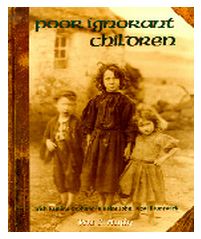
|
Poor Ignorant ChildrenTitle: Poor Ignorant ChildrenBookID: poorig-nonficAuthors: Peter D. MurphyISBN-10(13): 0-9696252-1-9Publisher: D Arcy McGee Chair of Irish Studies, Saint Marys UniversityPublication date: 1999Edition: 1stLanguage: EnglishPrice: N/A
"Bad and all as we were we often wished we never seen St. John," lamenated an Irish Famine survivor. Fifteen thousand Irish refugees arrived in Saint John, New Brunswick, in 1847 alone. In Poor Ignorant Children, Peter Murphy charts the fate of Irish orphans in a strange unwelcoming land. Peter D. Murphy is a Halifax-based historian and genealogist. |
New Lives for Old: The Story of Britains Child Migrants
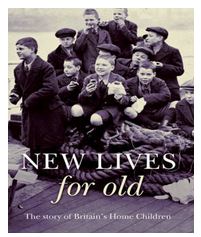
Over 100,000 children were sent across the seas to Canada between 1869 and the late 1930s. Thousands of others were dispatched to Australia as well as to New Zealand, South Africa and Rhodesia up to and even after the Second World War. These young migrants came from charitable organizations or children's homes, and were sent to find a better life as agricultural workers and servants, mechanics and skilled artisans. They were the superfluous thousands of Britain's cities, including workhouse paupers, reformatory inmates, children from industrial schools and those rescued from slums and the streets. Ranging from five- and six-year olds to teenagers, all were thrust into an alien world from which there was little chance of return. This compelling book tells the story of this controversial practice, from the accounts of those involved and the authentic records of the time. It traces the people behind the migrations exploring their beliefs and aspirations for the children in their care. It considers the roles that different organizations (including the Children s Society, National Children s Home and the Catholic Nugent Society Care Homes) played as well as the shipping lines that carried the children from Liverpool, Glasgow and other ports and the centers that received them overseas. Most importantly, it describes the experiences of the children themselves. Clear-sighted and objective, this is a gripping tale of the good, the bad and the ugly based on original documents from The National Archives and other sources. Above all, it celebrates those who welcomed the migrants and the children who managed, against all the odds, to adapt to their new lives.
Marchmont: Distributing Home, Belleville, Ontario, 1870-1925
Title: Marchmont: Distributing Home, Belleville, Ontario, 1870-1925BookID: march-nonficAuthors: James S. GilchristISBN-10(13): 1-55306-571-9Publisher: Epic PressPublication date: Edition: 1stLanguage: EnglishPrice: $20.95
Jim Gilchrist was born in Cobden, Ontario and grew up in Petawawa Township. He attended S.S.4 Public School and Pembroke High School. He spent three years with the Royal Canadian Regiment (1957-60). After military service, he went to Bondy Barber School in Ottawa and barbered for a time. He also studied for the United Church ministy at Queen's University (1968-71) and served several pastorates in the Bay of Quinte area. Jim now lives in Trenton with his wife Mary. They have two sons, Joel and Andrew.
Jim's interest in the British Home Children derived from his grandmother who was one of these deserted children. Her name was Alice Carney and she came to Canada in August 1872, under the auspices of Maria Rye from a Kensington Workhouse, in St. Mary Abbot's Parish, London, England. Jim's search for information about Alice introduced him to the Marchmont Home. What he discovered was much critical opinion about the British Home Children. In light of many positive stories about Home Children, Jim was convinced the truth lay not in the opinion of the critics but in the stories and letters of the Home Children themselves. This book, then, is written solely to provide information from research on those who experienced Marchmont firsthand, those who faced bleak and terrible times in England but, in coming to Canada, altered those odds drastically to become the successes they were.
Jim Gilchrist was born in Cobden, Ontario and grew up in Petawawa Township. He attended S.S.4 Public School and Pembroke High School. He spent three years with the Royal Canadian Regiment (1957-60). After military service, he went to Bondy Barber School in Ottawa and barbered for a time. He also studied for the United Church ministy at Queen's University (1968-71) and served several pastorates in the Bay of Quinte area. Jim now lives in Trenton with his wife Mary. They have two sons, Joel and Andrew.
Jim's interest in the British Home Children derived from his grandmother who was one of these deserted children. Her name was Alice Carney and she came to Canada in August 1872, under the auspices of Maria Rye from a Kensington Workhouse, in St. Mary Abbot's Parish, London, England. Jim's search for information about Alice introduced him to the Marchmont Home. What he discovered was much critical opinion about the British Home Children. In light of many positive stories about Home Children, Jim was convinced the truth lay not in the opinion of the critics but in the stories and letters of the Home Children themselves. This book, then, is written solely to provide information from research on those who experienced Marchmont firsthand, those who faced bleak and terrible times in England but, in coming to Canada, altered those odds drastically to become the successes they were.
Lost Children of the Empire
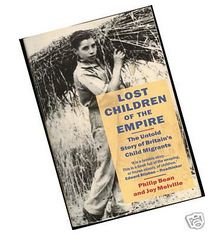
Title: Lost Children of the EmpireBookID: lostchil-nonficAuthors: Phillip BeanISBN-10(13): 0044403585Publisher: Unwin HymanPublication date: April 1989Edition: 1stLanguage: EnglishPrice: Varies
The extraordinary and untold story of Britain's child migrants is one of 350 years of shaming exploitation. Around 130,000 children, some just 3 or 4 years old, were shipped off to distant parts of the Empire, the last as recently as 1967. For Britain it was a cheap way of emptying children's homes and populating the colonies with 'good British stock'; for the colonies it was a source of cheap labour. The so-called philanthropists and child 'care' agencies which set up migration schemes in the last century built up the dream of a new life in new lands. But in practice, life for the 90,000 children exported to Canada from the 1860s to the 1920s was often one of unremitting hardship, working a sixteen-hour day on isolated farmsteads; they were often beaten and mistreated and never saw their families or the shores of Britain again. But the real shock is that child migration did not end in the 1920s. Even after the Second World War, until it ended some twenty years ago, around 10,000 children were transported to Australia - where many were subjected to at best uncaring abandonment, and at worst a regime of appalling cruelty. Abuse and deception characterised the Australian schemes. Parents were told that their children had been adopted in Britain, children were brought up in Australian institutions to believe they were orphans. Now adults, they still break down when they relate their experiences, and for many the search for family has become a lifelong crusade. Because of the withholding or absence of information, only some are reunited with mothers and relatives they did not know existed - a reunion of happiness and confusion on one side, and guilt and disbelief on the other. Lost Children of the Empire tells the remarkable story of the Child Migrants Trust set up, in 1987, to trace families and to help those involved to come to terms with what has happened. But nothing can explain away the connivance and irresponsibility of the governments and organisations involved in this inhuman chapter of British history. Dr. Philip bean is a trustee of the Child Migrants Trust. Joy Melville is an author and freelance journalist.
The extraordinary and untold story of Britain's child migrants is one of 350 years of shaming exploitation. Around 130,000 children, some just 3 or 4 years old, were shipped off to distant parts of the Empire, the last as recently as 1967. For Britain it was a cheap way of emptying children's homes and populating the colonies with 'good British stock'; for the colonies it was a source of cheap labour. The so-called philanthropists and child 'care' agencies which set up migration schemes in the last century built up the dream of a new life in new lands. But in practice, life for the 90,000 children exported to Canada from the 1860s to the 1920s was often one of unremitting hardship, working a sixteen-hour day on isolated farmsteads; they were often beaten and mistreated and never saw their families or the shores of Britain again. But the real shock is that child migration did not end in the 1920s. Even after the Second World War, until it ended some twenty years ago, around 10,000 children were transported to Australia - where many were subjected to at best uncaring abandonment, and at worst a regime of appalling cruelty. Abuse and deception characterised the Australian schemes. Parents were told that their children had been adopted in Britain, children were brought up in Australian institutions to believe they were orphans. Now adults, they still break down when they relate their experiences, and for many the search for family has become a lifelong crusade. Because of the withholding or absence of information, only some are reunited with mothers and relatives they did not know existed - a reunion of happiness and confusion on one side, and guilt and disbelief on the other. Lost Children of the Empire tells the remarkable story of the Child Migrants Trust set up, in 1987, to trace families and to help those involved to come to terms with what has happened. But nothing can explain away the connivance and irresponsibility of the governments and organisations involved in this inhuman chapter of British history. Dr. Philip bean is a trustee of the Child Migrants Trust. Joy Melville is an author and freelance journalist.
J. W. C. Fegan, A Tribute
Title: J. W. C. Fegan, A TributeBookID: lifeoffegan-nonficAuthors: W. Y. Fullerton, D.D.ISBN-10(13): 1-894378-89-XPublisher: Historical Reprint by Global Heritage PressPublication date: 1925Edition: ReprintLanguage: EnglishPrice: $32.00 US
The life of James William Condell Fegan is presented by W. Y. Fullerton. It tells the tale of a man who devoted his life to helping the poor.
Between 1869 and the early 1930s, over 100,000 children were sent to Canada from Great Britain during the child emigration movement. Sometimes referred to as waifs and strays, emigrant children and simply orphans, today these children are collectively known as British Home Children. A number of sending agencies were involved in bringing children to Canada, including Fegan Homes. Each year from 1884 to 1939, with a few exceptions, parties of boys from Fegan's emigrated to Canada. Generally the boys would be 14 years of age when they went, although on occasion they might be younger, particularly if they were accompanying an older brother.
The prospect of work, and of a good start in life, was much better in Canada than in England at the time. A 'Receiving Home' was established in 1886 in Toronto, from where the boys would be found a placement on a farm. Each boy's experience was different.
Work is well underway to bring the historic records of Canadian Fegan Boys to print. The reprinting of J. W. C. Fegan, A Tribute, the story of the life of James William Condell Fegan represents the first of a number of volumes to be printed about the Canadian Fegan Boys.
All royalties from this book are donated to the Fegan Homes in England, where they continue to help children to this day.
The life of James William Condell Fegan is presented by W. Y. Fullerton. It tells the tale of a man who devoted his life to helping the poor.
Between 1869 and the early 1930s, over 100,000 children were sent to Canada from Great Britain during the child emigration movement. Sometimes referred to as waifs and strays, emigrant children and simply orphans, today these children are collectively known as British Home Children. A number of sending agencies were involved in bringing children to Canada, including Fegan Homes. Each year from 1884 to 1939, with a few exceptions, parties of boys from Fegan's emigrated to Canada. Generally the boys would be 14 years of age when they went, although on occasion they might be younger, particularly if they were accompanying an older brother.
The prospect of work, and of a good start in life, was much better in Canada than in England at the time. A 'Receiving Home' was established in 1886 in Toronto, from where the boys would be found a placement on a farm. Each boy's experience was different.
Work is well underway to bring the historic records of Canadian Fegan Boys to print. The reprinting of J. W. C. Fegan, A Tribute, the story of the life of James William Condell Fegan represents the first of a number of volumes to be printed about the Canadian Fegan Boys.
All royalties from this book are donated to the Fegan Homes in England, where they continue to help children to this day.
|
For the Sake of the Children. Inside Barnardos
Title: For the Sake of the Children. Inside BarnardosBookID: forthesake-nonficAuthors: June RoseISBN-10(13): 0708842453Publisher: Futura PublicationsPublication date: April 13, 1989Edition: NewLanguage: EnglishPrice: Varies
(from Orphantrainriders.com)The author gives an alternate view of the "good deeds" of the Banardo Homes. She offers the opinion that the children were often deported illegally and given false information on families and siblings, the families themselves often told lies about the children themselves. The Author also contends that the children were not always treated well and suffered horrendous abuse by host families. |
Barnardo
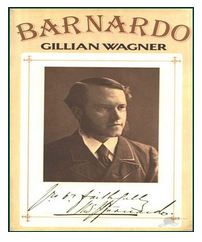
Title: BarnardoBookID: barardo-nonficAuthors: Dame Gillian WagnerISBN-10(13): 0297775618Publisher: Weidenfeld and NicolsonPublication date: 1979Edition: 1stLanguage: EnglishPrice: $5.03 and up
"BARNADO describes Dr Barnado's gradual discovery of the realities of child destitution amd his belief that only the state could deal effectively with the scandal of homeless children. In the absence of legislation, he assumed responsibility for all destitute children. In most cases his success was undeniable. BARNARDO assesses this great and complex man, acclaimed only after his death."
From Wikipedia:
"Thomas John Barnardo (1845-1905), Irish philanthropist, and founder and director of homes for destitute children, was born in Dublin, Ireland, in 1845. From the foundation of the homes in 1867 to the date of Barnardos death, nearly 60,000 children had been rescued, trained and placed out in life. The work of Thomas Barnardo is continued today by the charity Barnardo's...What was considered the most useful of all the varied work instituted by Barnardo was the emigration system, by which means thousands of boys and girls have been sent to British colonies, chiefly to Canada, where there were distributing centres at Toronto and Winnipeg, and an industrial farm of some 8000 acres (32 km) near Russell in Manitoba. The fact that in Canada less than 2% of the children sent out proved failures confirmed Barnardos conviction that "if the children of the slums can be removed from their surroundings early enough, and can be kept sufficiently long under training, heredity counts for little, environment for almost everything."
Hardback; 344 pages; Black & white photographs.
"BARNADO describes Dr Barnado's gradual discovery of the realities of child destitution amd his belief that only the state could deal effectively with the scandal of homeless children. In the absence of legislation, he assumed responsibility for all destitute children. In most cases his success was undeniable. BARNARDO assesses this great and complex man, acclaimed only after his death."
From Wikipedia:
"Thomas John Barnardo (1845-1905), Irish philanthropist, and founder and director of homes for destitute children, was born in Dublin, Ireland, in 1845. From the foundation of the homes in 1867 to the date of Barnardos death, nearly 60,000 children had been rescued, trained and placed out in life. The work of Thomas Barnardo is continued today by the charity Barnardo's...What was considered the most useful of all the varied work instituted by Barnardo was the emigration system, by which means thousands of boys and girls have been sent to British colonies, chiefly to Canada, where there were distributing centres at Toronto and Winnipeg, and an industrial farm of some 8000 acres (32 km) near Russell in Manitoba. The fact that in Canada less than 2% of the children sent out proved failures confirmed Barnardos conviction that "if the children of the slums can be removed from their surroundings early enough, and can be kept sufficiently long under training, heredity counts for little, environment for almost everything."
Hardback; 344 pages; Black & white photographs.
After Barnardo: The Phenomenon of Child Migration from Tilbury to Sydney from 1921-1965
Title: After Barnardo: The Phenomenon of Child Migration from Tilbury to Sydney from 1921-1965BookID: afterbarn-nonficAuthors: Ann Howard and Eric LeonardISBN-10(13): 0646351133Publisher: Tarka Publishing, SydneyPublication date: 1999Edition: 1stLanguage: EnglishPrice: Varies
This fascinating and moving book came about through a chance meeting between Ann Howard, a writer, and Eric Leonard, a Barnardo's boy who arrived in Sydney in 1937 and subsequently became a successful business man. It does more than merely tell the stories of a handful of the 2,000 children sent to Australia under the Barnardo child migration policy; it brings their stories alive by personal reminiscences, official reports, letters, speeches and photographs.
A wide-ranging, introduction sets the scene, giving a historical perspective to the story and seeking to unravel the complicated truths that fuelled the child migration movement. The facts are stated unemotionally and are the more compelling for the non-judgemental way in which they are presented.
But, like a drum beat, the underlying theme of the book is why? why? why? There is a terrible logic as to why children were taken from kith and kin. But why did the adults lie to them about their families and by suppressing knowledge of the children's past, deprive so many of them of their sense of identity?
The way in which the children themselves came to terms with their predicament is perhaps the most compelling aspect of this book. Marjorie Marchant writes: "Aged 74 I look back with adult thoughts on what was done for me with the best of intentions, but very bewildering when you are taken away from all you know."
The co-author, Eric Leonard, wants to leave a positive message, writing: "I feel that child migrants must look back and be proud of the contribution they have made and the lifestyles they have achieved." For some the emotional distress was just too much to bear and they have felt unable to contribute, but in a triumph of the human spirit, some were even able to forgive.
In a final twist, the co-authors ask us to consider what we are now doing to the children of donor and surrogate parents. They, too, have a right to be informed and given their past as much as the migrant children who had no choice.
Reviewed by Gillian Wagner (Chairperson, Barnardo's 1978-84 and author of Barnardo and Children of the Empire)
This fascinating and moving book came about through a chance meeting between Ann Howard, a writer, and Eric Leonard, a Barnardo's boy who arrived in Sydney in 1937 and subsequently became a successful business man. It does more than merely tell the stories of a handful of the 2,000 children sent to Australia under the Barnardo child migration policy; it brings their stories alive by personal reminiscences, official reports, letters, speeches and photographs.
A wide-ranging, introduction sets the scene, giving a historical perspective to the story and seeking to unravel the complicated truths that fuelled the child migration movement. The facts are stated unemotionally and are the more compelling for the non-judgemental way in which they are presented.
But, like a drum beat, the underlying theme of the book is why? why? why? There is a terrible logic as to why children were taken from kith and kin. But why did the adults lie to them about their families and by suppressing knowledge of the children's past, deprive so many of them of their sense of identity?
The way in which the children themselves came to terms with their predicament is perhaps the most compelling aspect of this book. Marjorie Marchant writes: "Aged 74 I look back with adult thoughts on what was done for me with the best of intentions, but very bewildering when you are taken away from all you know."
The co-author, Eric Leonard, wants to leave a positive message, writing: "I feel that child migrants must look back and be proud of the contribution they have made and the lifestyles they have achieved." For some the emotional distress was just too much to bear and they have felt unable to contribute, but in a triumph of the human spirit, some were even able to forgive.
In a final twist, the co-authors ask us to consider what we are now doing to the children of donor and surrogate parents. They, too, have a right to be informed and given their past as much as the migrant children who had no choice.
Reviewed by Gillian Wagner (Chairperson, Barnardo's 1978-84 and author of Barnardo and Children of the Empire)
Windows: British Child Migrants to Africa,
Rhodesia Fairbridge Memorial College
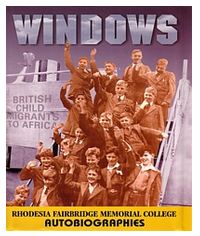
Title: Windows: British Child Migrants to Africa, Rhodesia Fairbridge Memorial CollegeBookID: windows-nonficAuthors: Compiled by Peter GouldISBN-10(13): 047307110XPublisher: FairbridgePublication date: 2001Edition: Language: EnglishPrice: 35.00 UK
The story has emerged over the last decade of Britain's 130,000 child migrants. In schemes which ended as recently as 1967, the welfare and well-being of the children was in many cases neglected, as has been widely reported by the news media in recent years.
This is the story of a group of children sent to Rhodesia and the Rhodesia Fairbridge Memorial College. This scheme was set up on a disused airbase near Bulawayo, which began in 1946 and ended in 1962.
Many of the children were put forward for the scheme by relatives who genuinely believed they would have a better life in another country. There were, however, other instances where the motives were not so benevolent.
Although the children were generally treated well by those responsible for their care, they had to fend for themselves for the most part, suffering their own very personal emotional traumas, insecurities, and inadequacies that somehow had to be lived with and overcome. A number of the children never came to terms with their lives there, and are presently seeking compensation from the British Government. The majority, it would appear, have gained from the experience and made a success of their lives - despite or because of having been sent there.
Peter Gould, himself a former child migrant who attended the College, has collected life stories of a number of those who were there with him, and which are now told in this book. Here you can read tales of hardship and privation, but also of cheerful optimism, brave self-reliance, and caring staff.
It is said that true life stories are stranger than fiction. Here are their stories.
The story has emerged over the last decade of Britain's 130,000 child migrants. In schemes which ended as recently as 1967, the welfare and well-being of the children was in many cases neglected, as has been widely reported by the news media in recent years.
This is the story of a group of children sent to Rhodesia and the Rhodesia Fairbridge Memorial College. This scheme was set up on a disused airbase near Bulawayo, which began in 1946 and ended in 1962.
Many of the children were put forward for the scheme by relatives who genuinely believed they would have a better life in another country. There were, however, other instances where the motives were not so benevolent.
Although the children were generally treated well by those responsible for their care, they had to fend for themselves for the most part, suffering their own very personal emotional traumas, insecurities, and inadequacies that somehow had to be lived with and overcome. A number of the children never came to terms with their lives there, and are presently seeking compensation from the British Government. The majority, it would appear, have gained from the experience and made a success of their lives - despite or because of having been sent there.
Peter Gould, himself a former child migrant who attended the College, has collected life stories of a number of those who were there with him, and which are now told in this book. Here you can read tales of hardship and privation, but also of cheerful optimism, brave self-reliance, and caring staff.
It is said that true life stories are stranger than fiction. Here are their stories.
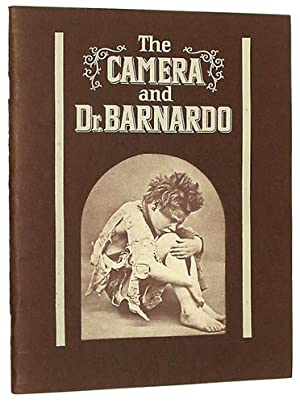
As transcribed by M. Diane Rogers
This is a list of those photographs that are identified by name/place. If you see a name of interest, you can check a local library for a copy of the catalogue or e-mail me privately for any more info. BELL Wm. 27 Feb 1875 - together w/Robt. BELL, page 10 BELL Robt. 27 Feb 1875 - together w/Wm. BELL, page 10 SANDIFORD Hy 27 Feb 1875 - together with Jas SANDIFORD, page 10 SANDIFORD Jas 27 Feb 1875 - together with Hy SANDIFORD, page 10 WHITES Grace 27 Feb 1875 - also photo of the two WHITES together, page 10 WHITES Marion 27 Feb 1875 - also photo of the two WHITES together, page 10 SULLIVAN J. 3 March 1875, page 10 ASHMEAD Basil 3 March 1875, page 10 WILKINSON H.W. ? 3 March 1875, page 10 KINNARE James, 8 March 1875, page 10 GRANT, 9 March 1875, page 10 GOODYEAR Robt., 12 March 1875, page 10 RILEY Wm., 12 March 1875, page 10 STEPHENSON Thomas Bowman, c 1871, Bonner Road Home, page 19 BAYES Thomas, before 1874, page 26 COOT Francis, before 1874, page 26 DEAN William, before 1874, page 26 MALONEY John, before 1874, page 26 WOOD Edward, 1873, History sheet with/3 photos, page 31 HARTNELL John, 22 July 1891?, page 32 MCGLYNN Josh, 20 May 1892, page 32 FURGUSON Alex, page 32 MARKS Thomas, 20 October 1891, page 32 FYFORD Sarah, 18 December 1875, page 33 BURGE Sarah, 5 January 1883, page 33 CARR Ellen, 15 February 1893, page 33 MCLELLAND Alice, 7 March 1893, 33 EVANS Annie, 2 photos, page 34 DUNFORD George, 2 photos, page 34 Also photographs of these groups, etc.: RAGGED SCHOOL GROUP, Westminster, London, c. 1866, Teacher Mr. WOOD, page 18 BONNER ROAD HOME, c. 1871- One ID - Thomas Bowman STEPHENSON, page 19 Once A Little Vagrant, page 20 Now A Little Workman, page 20 Boys, STEPNEY BOYS HOME, 1893, page 28 First Barnardo boys to Canada, 1882, on board the Parisian, page 35 First Barnardo girls to Canada, 1883, to travel on the Sardinia, page 35 Woodchopping Brigade, Rhodeswell Wharf, page 36 "Cripples", boys, STEPNEY CAUSEWAY HOME, page 37 Boys Band, page 38 "Feeble-minded" girls, 1894, page 38 Girl with lordosis, 2 photos, page 39 Children outside EDINBURGH CASTLE MISSION SCHOOL -sign visible, Barnado's Home, etc., page 40
This is a list of those photographs that are identified by name/place. If you see a name of interest, you can check a local library for a copy of the catalogue or e-mail me privately for any more info. BELL Wm. 27 Feb 1875 - together w/Robt. BELL, page 10 BELL Robt. 27 Feb 1875 - together w/Wm. BELL, page 10 SANDIFORD Hy 27 Feb 1875 - together with Jas SANDIFORD, page 10 SANDIFORD Jas 27 Feb 1875 - together with Hy SANDIFORD, page 10 WHITES Grace 27 Feb 1875 - also photo of the two WHITES together, page 10 WHITES Marion 27 Feb 1875 - also photo of the two WHITES together, page 10 SULLIVAN J. 3 March 1875, page 10 ASHMEAD Basil 3 March 1875, page 10 WILKINSON H.W. ? 3 March 1875, page 10 KINNARE James, 8 March 1875, page 10 GRANT, 9 March 1875, page 10 GOODYEAR Robt., 12 March 1875, page 10 RILEY Wm., 12 March 1875, page 10 STEPHENSON Thomas Bowman, c 1871, Bonner Road Home, page 19 BAYES Thomas, before 1874, page 26 COOT Francis, before 1874, page 26 DEAN William, before 1874, page 26 MALONEY John, before 1874, page 26 WOOD Edward, 1873, History sheet with/3 photos, page 31 HARTNELL John, 22 July 1891?, page 32 MCGLYNN Josh, 20 May 1892, page 32 FURGUSON Alex, page 32 MARKS Thomas, 20 October 1891, page 32 FYFORD Sarah, 18 December 1875, page 33 BURGE Sarah, 5 January 1883, page 33 CARR Ellen, 15 February 1893, page 33 MCLELLAND Alice, 7 March 1893, 33 EVANS Annie, 2 photos, page 34 DUNFORD George, 2 photos, page 34 Also photographs of these groups, etc.: RAGGED SCHOOL GROUP, Westminster, London, c. 1866, Teacher Mr. WOOD, page 18 BONNER ROAD HOME, c. 1871- One ID - Thomas Bowman STEPHENSON, page 19 Once A Little Vagrant, page 20 Now A Little Workman, page 20 Boys, STEPNEY BOYS HOME, 1893, page 28 First Barnardo boys to Canada, 1882, on board the Parisian, page 35 First Barnardo girls to Canada, 1883, to travel on the Sardinia, page 35 Woodchopping Brigade, Rhodeswell Wharf, page 36 "Cripples", boys, STEPNEY CAUSEWAY HOME, page 37 Boys Band, page 38 "Feeble-minded" girls, 1894, page 38 Girl with lordosis, 2 photos, page 39 Children outside EDINBURGH CASTLE MISSION SCHOOL -sign visible, Barnado's Home, etc., page 40
|
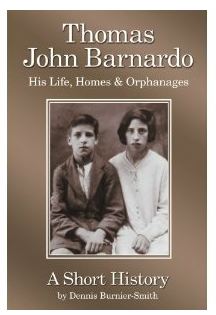
Thomas John BarnardoThe book is not just a biography of Dr Thomas John Barnardo, the Irish philanthropist who set up a national chain of Homes and orphanages for destitute and under-priviledged children. The book also contains vignettes of the people around Dr Barnardo; people that influenced him and helped him, people such as his wife Syrie and Lord Shaftesbury, Benjamin Disraeli, James Hudson Taylor and others that had a bearing on the man and his ideas. The book describes the trades learnt in the homes and gives an insight into the Naval Training Schools and the boarding out and emigration of children to the British Colonies. it also has a chapter on the way Barnardo's is run today and how the charity faces different challenges in the modern world
|
Unlocking the Past: The Impact of Access to Barnardo's Childcare Records [Hardcover]
This text explores the impact of access to child care records, specifically upon adults who grew up in the care of Barnardo's. Most of the adults studied had reached their middle years with little or no knowledge of their family background or reasons for admission to care. The book researches the links between quality of care in childhood and the intensity of "need to know" about origins in later life. It looks at the complex process of assimilating information, and the need for such information to be imparted with skillful judgement and sensitivity. The implications for service provision for those seeking access to their records is highlighted, as well as for current child care practitioners. Requests for access to care records at Barnardo's have grown from around 1500 a year prior to 1995, to several thousand in one month alone following media publicity about the opening up of Barnardo's records. Other organizations are just beginning to recognize the growing demands for this service. This text aims to use these studies to examine the impact, particularly upon sense of identity, of ignorance about one's origins and the effects of acquiring such information later in life.
|
|
|
Memoirs of the Late Dr. Barnardo
|
|
Dr. Barnardo: The Foster-Father of "Nobody's Children.": A Record and an Interpretation
|
|
Canadian Homes for London Wanderers
|